Peter: If your classroom feels like it’s held together with lamination and sheer willpower by mid-morning, Cristina Coaches ECE has some thoughts on that.
Maria: Cristina Arvun has been writing about the practical and the personal — room design that heads off behavior problems, the mindset work educators need to sustain themselves, and building real trust with families right from the first week.
Peter: Let’s start with what the room is actually doing to your students before anyone even walks in the door.
The Room Is Your Silent Co-Teacher
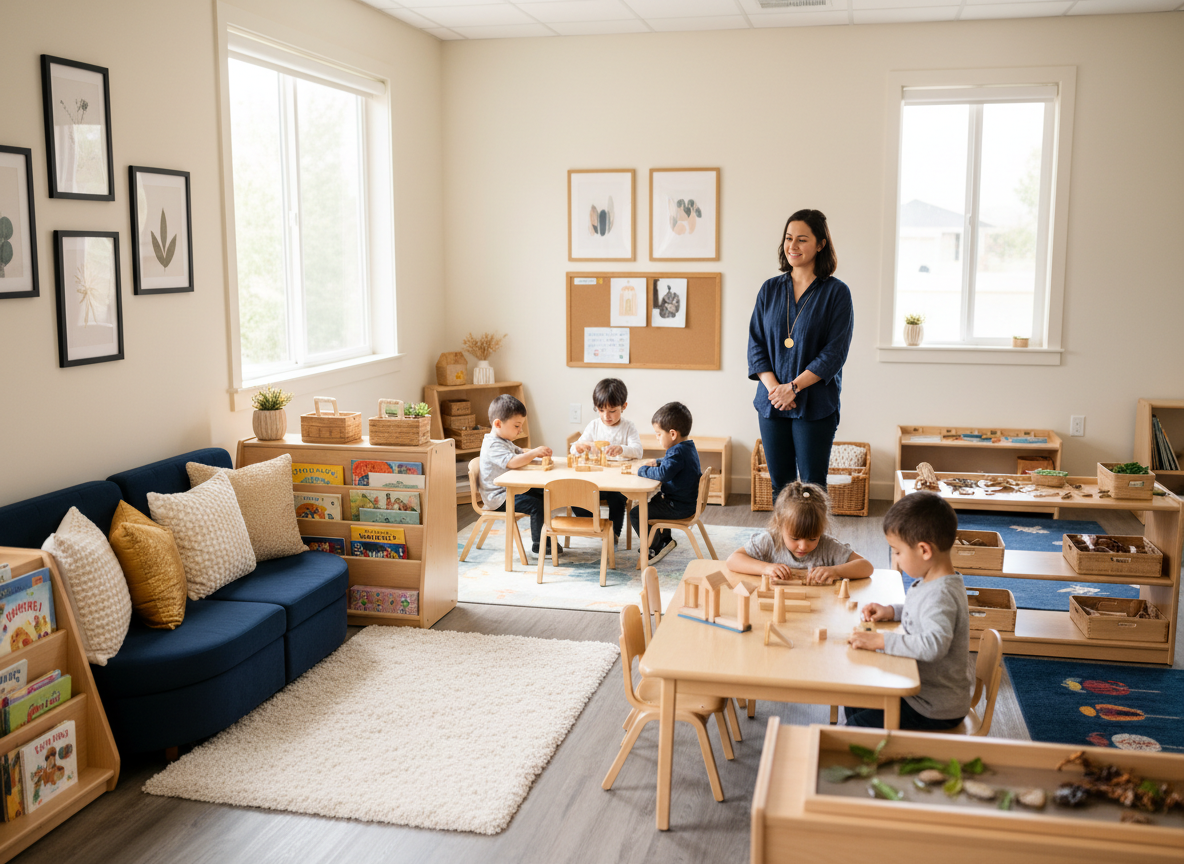
Peter: The argument here is that most classroom behavior problems are environmental before they are behavioral — the room is creating the chaos, not the kids.
Maria: The post puts it plainly: “If your eyes don’t know where to land, neither do your students.” That’s the diagnostic in one sentence.
Peter: So visual clutter isn’t just an aesthetic problem — it’s a regulation problem. Overstimulated eyes, overstimulated kids.
Maria: The reset itself takes five minutes across three moves: pull things off the walls and counters, separate active zones from quiet ones, and set up a cozy corner. On that last one, the post is specific — the corner is not a time-out spot. It’s where students go to regulate, and teaching that distinction matters.
Peter: Right, because if the only calm space doubles as a consequence, nobody wants to use it when they actually need it.
Maria: Exactly — and the phrase the post lands on is worth holding: “the room is your silent co-teacher.” Which means it’s either working for you or against you, every hour of the day.
Peter: That framing shifts the whole question from managing kids to managing the environment. Which connects directly to how educators think about their own role.
Affirmations As Professional Practice

Maria: The post on morning affirmations opens by naming the real conditions — systemic undervaluing, chronic under-resourcing, the emotional weight of caring for many children at once — and argues that affirmations are a deliberate response to that, not a soft workaround.
Peter: It frames them as a professional toolkit item, which is a harder sell than it sounds.
Maria: The post makes the case directly: “Morning affirmations are not about vague positivity; they are a deliberate professional practice that grounds you in your purpose, protects your confidence, and strengthens your capacity to lead your classroom with clarity and calm.”
Peter: So the point is sustainability, not cheerfulness.
Maria: Right. The five affirmations cover professional identity, emotional leadership, tolerating messy days, claiming the right to be resourced, and staying rooted in long-term impact. That last one matters — the post notes that much of this work’s impact is invisible in the moment.
Peter: Which is a genuinely hard thing to sustain a career on.
Maria: And the trust piece — with families — is where that sustained presence becomes most visible from the outside.
Families Remember Feeling Seen

Peter: The first-week-of-school post opens with a provocation: generic welcome emails get deleted. The question is what actually builds trust that lasts.
Maria: The post offers three strategies, and the example it gives for the first one does the work better than any explanation. The suggested voice note goes: “Hi, Mrs. Rodriguez. I just met Maya today, and she is wonderfully curious — she told me all about her cats. I am so excited to be her teacher this year.”
Peter: Specific child, specific detail, two minutes of effort. That’s the whole formula.
Maria: The second strategy follows the same logic — photograph each child in an activity and caption it with a direct observation, not a lesson summary. And the third is a single intentional question at pickup: what’s one thing I should know about your child that would help me support them?
Peter: Three moves, no extra planning time, no additional resources. Just intention — which the post points out every dedicated educator already has.
Maria: And that’s the thread running through all of it: the room, the mindset, the family connection — they’re all about using what you already have, more deliberately.
Peter: Deliberate is the word, isn’t it. Five minutes, one question, one affirmation — small moves, compounding.
Maria: The kind of thing that looks invisible until suddenly the whole year feels different. More on that next time.


Leave a comment